Nuclear Reporting Cells
Nuclear Reporting Cells were staffed by civilian volunteers from the Royal Observer Corps, although they were located in Ministry of Defence sites. The cell's role is similar to the UKWMO Group but provided fallout warning and radiation level data to the armed services. This continued after the stand down of the ROC on 30 September 1991 until all sixteen were eventually closed on 31 December 1995.
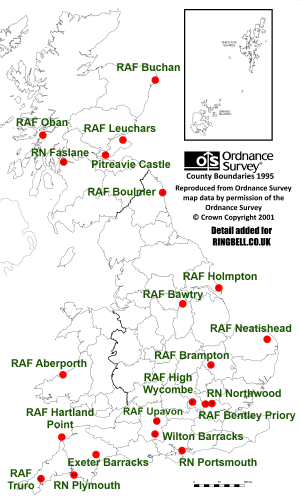
The NRC received its nuclear burst and fallout information from a feeder U.K.W.M.O. Group Headquarters in the same way that groups shared this data amongst themselves. The NRC had links directly from the UKWMO telegraph network. Their addressing codes were published in the UKWMO Standard Operating Procedures 'Annex AM', although the actual NRC location wasn't recorded in the annex, they are cross referenced here.
| ROC Group | Telegraph Code | NRC Number | Location |
|---|---|---|---|
| INV | INVN01 | 1 | Oban |
| ABE | ABEN02 | 2 | Buchan |
| DUN | DUNN03 | 3 | Pitreavie |
| DUR | DURN04 | 4 | Boulmer |
| YOR | YORN05 | 5 | Holmpton |
| LIN | LINN06 | 6 | Brampton |
| NOR | NORN07 | 7 | Neatishead |
| OXF | OXFN08 | 8 | High Wycombe |
| BED | BEDN09 | 9 | Bentley Priory |
| HOR | HORN10 | 10 | Northwood |
| WIN | WINN11 | 11 | Wilton |
| BRI | BRIN12 | 12 | Upavon |
| WIN | WINN13 | 13 | Portsmouth |
| EXE | EXEN14 | 14 | Plymouth |
| EXE | EXEN15 | 15 | Truro |
| AYR | AYRN16 | 16 | Faslane |
The routing codes found in the MSX at Dundee Sector, generally agree with those published in the feeder group table extracted from Annex AM. Those confirmed are ABEN02, AYRN16, BEDN09, BRIN12, DUNN03, DURN04, EXEN14, EXEN15, HORN10, INVN01, WINN11, WINN13, YORN05. The only difference is NRC 6 is BEDN06, moving there from Lincoln.
Feedback received from Janet cast doubt about the MSX codes in the table above. I wonder if her comments relate to the period after the UKWMO stand down?
'... all NRCs were designated by their Sector. Although Portsmouth may have been within Winchester Group it was designated with the Sector Control Horsham. Sector=HOR, MSX Code=HORN13 (not WINN13) Portsmouth Naval Base....'

 This page is Copyright © RINGBELL.CO.UK, under a